|
|
| Line 15: |
Line 15: |
| | Popularity of [[Kalighat paintings]] at its peak | | Popularity of [[Kalighat paintings]] at its peak |
| | ------ | | ------ |
| | + | [http://images.google.co.in/imgres?imgurl=http://banglapedia.net/Images/KalighatPainting1.jpg&imgrefurl=http://banglapedia.net/HT/K_0042.HTM&usg=__87hZeL231ZtZF8L8-dAr1C8dNyw=&h=300&w=194&sz=57&hl=en&start=11&um=1&tbnid=5WeePjiDjIjOUM:&tbnh=116&tbnw=75&prev=/images%3Fq%3Dkalighat%2Bpainters%2B19th%2Bcentury%26hl%3Den%26lr%3D%26sa%3DN%26um%3D1] |
| | + | |
| | + | He was a pat painter by lineage, by having learnt his father's occupation. He had moved to Calcutta a few summers ago. |
| | + | One day a rich patron with a taste for the cheap- he lived with an aged prostitute when he came to Boribazaar for three, sometimes five weeks and more- gifted him a picture of the gods, spectacular, fresh from some new 'press'. The old man liked to transfer some things from his river facing mansion, to the poorer quarters he frequented. He was an alright fellow, really, the old man, he would smile hugely when he shared his second hand goods. |
| | + | |
| | + | [[Image:Man and woman on cot, kalighat.jpeg]] |
| | + | |
| | + | The modern print of Kali lay in the back of the painter's hut, in pride of place. He quite admired it, without wanting to, and felt derisory without wanting to either. |
| | + | |
| | + | When his dazzled jealousy subsided enough to enable him to look closely, he noticed the pursed lips in the lines, a kind of mendicancy of making. Those small, careful strokes compensated for by the profusion of colours. The colours did not stand out, it seemed like the machines they came from had a way of sinking them INTO the paper, they became the picture. |
| | + | His own Kali, he thought, was a single line. Continuous as a human hair was the stroke of the hair brush that made it. That was the way with their paintings. |
| | + | |
| | + | The devi was looking away in anger. Her fury showed like he had never shown her.. It was that look away at someone.. she never looks thus when she looks at you, not in the many idols that make white shadows of the lanes that crowd around the Kali temple.. not in the temple either, does she ever look like this, not in their scrolls. She is somewhere else, in another land, somewhere far away from me. |
| | + | Not here, she is somewhere. |
| | + | |
| | + | Which wonderful machine had this strange capacity for dreams, he wondered, to dream up such an uneasy apparition? |
| | + | |
| | + | ---------------------------------------------- |
| | + | |
| | + | The famed Kalighat painters or Calcutta had to seriously contend with the oleograph, the wood-cut print, and the newsheet to make their work viable. |
| | + | |
| | + | The outlines of the Kalighat paintings were simple, allowing them to be copied in the lithograph presses and then filled in with colour. |
| | + | (But only with the coming of the chromolithograph was it possible to render the vivid colour in these paintings.) |
| | + | |
| | + | But the motifs did not only move one way.. while many cheap industrial copies of motifs and paintings developed by the pat artists were made, at the same time, the pat painters began incorporating motifs from these industrially produced pictures, which frequently worked Indian motifs with Western perpectivalism. |
| | + | --- |
| | + | |
| | + | |
| | [[Image:Shiva kalighat painting1.jpg]] | | [[Image:Shiva kalighat painting1.jpg]] |
| | 19th century kalighat painting | | 19th century kalighat painting |
| Line 30: |
Line 58: |
| | The IndoEuropean Telegraph line comes into operation. [http://72.14.235.132/search?q=cache:pksIrogONZgJ:www.new.dli.ernet.in/rawdataupload/upload/insa/INSA_1/20005ac0_277.pdf+beginning+of+telegraph+system+in+india&cd=6&hl=en&ct=clnk&gl=in] | | The IndoEuropean Telegraph line comes into operation. [http://72.14.235.132/search?q=cache:pksIrogONZgJ:www.new.dli.ernet.in/rawdataupload/upload/insa/INSA_1/20005ac0_277.pdf+beginning+of+telegraph+system+in+india&cd=6&hl=en&ct=clnk&gl=in] |
| | ---------------------------- | | ---------------------------- |
| − |
| |
| − | {| align=right cellpadding=3 id=toc style="margin-left: 15px;"
| |
| − | |-
| |
| − | | align="center" colspan=2 | <small>'''Years:'''</small><br> [[1867]] [[1868]] [[1869]] - [[1870]] - [[1871]] [[1872]] [[1873]]
| |
| − | |-
| |
| − | | align="center" colspan=2 | <small>'''[[Decades]]:'''</small> <br> [[1840s]] [[1850s]] [[1860s]] - '''[[1870s]]''' - [[1880s]] [[1890s]] [[1900s]]
| |
| − | |-
| |
| − | | align="center" | <small>'''[[Centuries]]:'''</small> <br> [[18th century]] - '''[[19th century]]''' - [[20th century]] <hr>
| |
| − | {{C19YearInTopic}}
| |
| − | |}
| |
| − |
| |
| − | '''1870''' ('''[[Roman numerals|MDCCCLXX]]''') was a [[common year starting on Saturday]] (see link for calendar) of the [[Gregorian calendar]] or a [[common year starting on Monday]] of the 12-day-slower [[Julian calendar]].
| |
| − |
| |
| − | ==Events==
| |
| − | * [[Franco-Prussian War]]
| |
| − | * Term "[[economics]]" first used, by [[Alfred Marshall]]
| |
| − | * In England, the [[Forfeiture Act]] was passed, abolishing the punishment of [[Hanging, drawing and quartering|hanging, drawing and quartering]].
| |
| − | * The [[North Carolina General Assembly]] forms a county from [[Currituck County, North Carolina|Currituck]], [[Tyrrell County, North Carolina|Tyrrell]] and [[Hyde County, North Carolina|Hyde]] counties and names it [[Dare County, North Carolina|Dare County]] in honor of [[Virginia Dare]]. The Dare county seat is laid out and named [[Manteo, North Carolina|Manteo]] in honor of Chief Manteo.
| |
| − | ===January===
| |
| − | *[[January 1]] - Plans for the [[Brooklyn Bridge]] are done.
| |
| − | *[[January 2]] - Construction of the [[Brooklyn Bridge]] begins.
| |
| − | *[[January 6]] - The inauguration of the [[Musikverein, Vienna|Musikverein]] ([[Vienna]]).
| |
| − | *[[January 10]] - [[John D. Rockefeller]] incorporates [[Standard Oil]]
| |
| − | *[[January 15]] - A political [[cartoon]] for the first time symbolizes the [[United States Democratic Party]] with a [[donkey]] ("A Live Jackass Kicking a Dead Lion" by [[Thomas Nast]] for ''[[Harper's Weekly]]'').
| |
| − | *[[January 26]] - [[American Civil War]]: [[Virginia]] rejoins the Union
| |
| − | *[[January 27]] - First college [[sorority]], [[Kappa Alpha Theta]], is formed at [[DePauw University]]
| |
| − | ===February===
| |
| − | * February - [[Vrain Denis-Lucas]] in sentenced for two years in prison for multiple [[forgery]] in Paris
| |
| − | *[[February 2]] - It is revealed that the famed [[Cardiff Giant]] was just carved [[gypsum]] and not the petrified remains of a [[human]].
| |
| − | *[[February 3]] - The [[United States Constitution/Amendment Fifteen|15th Amendment]] to the [[United States Constitution]] is passed
| |
| − | *[[February 10]] - [[Anaheim, California]] is incorporated.
| |
| − | * [[February 10]] - The [[YWCA]] is founded ([[New York, New York|New York City]])
| |
| − | *[[February 12]] - Women gain the [[right to vote]] in [[Utah|Utah Territory]].
| |
| − | *[[February 23]] - Military control of [[Mississippi]] ends and it is readmitted to the Union.
| |
| − | *[[February 25]] - [[Hiram Rhodes Revels]], a [[United States Republican Party|Republican]] from [[Mississippi]], is sworn into the [[United States Senate]], becoming the first [[African American]] ever to sit in the [[Congress of the United States|U.S. Congress]]
| |
| − | *[[February 26]] - In New York City, the first [[pneumatic]]-[[metro|subway]] is opened.
| |
| − | *[[February 28]] - The [[Bulgarian Exarchate]] is established by decree of Sultan [[Abd-ul-Aziz]] of the [[Ottoman Empire]].
| |
| − | ===March===
| |
| − | * [[March 2]] - [[Francisco Solano López]]' last troops cornered by [[War of the Triple Alliance|Triple Alliance]] troops at [[Cerro Cora]]. López refuses to surrender and is killed. Fighting ends in [[Paraguay]] - the [[War of the Triple Alliance]] is over
| |
| − | *[[March 24]] - [[Syracuse University]] is established and officially opens.
| |
| − | *[[March 30]] - The fifteenth amendment is entered into the [[ United States Constitution]], giving blacks the right to vote.
| |
| − | *[[March 30]] - [[Texas]] is readmitted to the Union following [[Reconstruction]].
| |
| − |
| |
| − | ===April===
| |
| − | * [[April 11]] - Irish peer [[Lord Muncaster]] and his entourage kidnapped in Greece
| |
| − | *[[April 22]] - [[Vladimir Lenin]] is born
| |
| − |
| |
| − | ===May===
| |
| − | *[[May 12]] - The [[Canada|Canadian]] province of [[Manitoba]] is created in response to [[Louis Riel]]'s [[Red River Rebellion]]
| |
| − | *[[May 14]] - First [[rugby football|rugby]] match to be played in [[New Zealand]], between the Nelson Football Club and [[Nelson College]].
| |
| − | *[[May 24]] - The [[Port Adelaide Football Club]] play their first match of [[Australian rules football]] at Buck's Flat, Glanville, [[South Australia]].
| |
| − | *[[May 24]] - Opening day of the [[Brooklyn Bridge]].
| |
| − |
| |
| − | ===June===
| |
| − | *[[June 22]] - The [[U.S. Congress]] creates the [[United States Department of Justice|Department of Justice]].
| |
| − | *[[June 26]] - [[Christmas]] is declared a federal holiday in the [[United States]]
| |
| − | ===July===
| |
| − | *[[July 13]] - The [[Emser Depesche]] serves as a reason for a [[war]] between [[Prussia]] and [[France]]
| |
| − | *[[July 15]] - [[Reconstruction]]: [[Georgia (U.S. state)|Georgia]] becomes the last former [[Confederate States of America|Confederate]] states to be readmitted to the [[United States|Union]], and the CSA is dissoluted.
| |
| − | *[[July 16]] [[Lambert McKenna]] is born, Irish scholar.
| |
| − | *[[July 19]] - [[Franco-Prussian War]]: [[France]] declares war on [[Prussia]].
| |
| − |
| |
| − | ===August===
| |
| − | ===September===
| |
| − | *[[September 2]] - [[Franco-Prussian War]]: [[Battle of Sedan]] - [[Prussia]]n forces defeat the [[France|French]] armies and take emperor [[Napoleon III]] and 100,000 of his soldiers prisoner at [[Sedan, France|Sedan]].
| |
| − | *[[September 4]] - Emperor [[Napoleon III of France]] is deposed and the [[French Third Republic|Third Republic]] is declared. [[Empress Eugenie]] flees to England with her children.
| |
| − | *[[September 6]] - Louisa Ann Swain of Laramie, Wyoming, votes in the morning, becoming the first woman in the United States to cast a vote legally after 1807.
| |
| − | *[[September 20]] - With ''[[Bersaglieri]]'' soldiers entering [[Rome]] at [[Porta Pia]], the [[unification of Italy]] is completed. End of the last remnant of the [[Papal States]].
| |
| − | ===October===
| |
| − | * [[October 2]] – [[Referendum]] in [[Rome]] supports joining the [[Italy]] with 133681 against 1500. Decision is made official [[October 6]]. [[Rome]] becomes the capital of [[Unification of Italy|unified]] [[Italy]]
| |
| − | * [[October 8]] - [[Leon Michel Gambetta]] escapes the besieged [[Paris]] in a [[hot-air balloon]]
| |
| − | ===November===
| |
| − | *[[November 1]] - In the [[United States]], the newly-created Weather Bureau (later renamed the [[National Weather Service]]) makes its first official [[Meteorology|meteorological]] forecast: "High winds at Chicago and Milwaukee... and along the Lakes".
| |
| − | *[[November 16]] - [[Spain|Spanish]] [[Cortes Generales|Cortes]] proclaims Amadeo de Saboya as king [[Amadeus I of Spain]].
| |
| − | ===December===
| |
| − | * December - Assassination of [[Juan Prim]], Prime minister of Spain
| |
| − |
| |
| − | ==Births==
| |
| − | *[[January 2]] - [[Ernst Barlach]], German sculptor, graphic artist, and poet (d. [[1938]])
| |
| − | *[[January 6]] - [[Gustav Bauer]], [[Chancellor of Germany]] (d. [[1944]])
| |
| − | *[[January 8]] - [[Miguel Primo de Rivera]], dictator of Spain (d. [[1930]])
| |
| − | *[[February 7]] - [[Alfred Adler]], Austrian psychologist (d. [[1937]])
| |
| − | *[[March 4]] - [[Thomas Sturge Moore]], English poet, author and artist (d. [[1944]])
| |
| − | *[[March 5]] - [[Frank Norris]], American writer (d. [[1902]])
| |
| − | *[[March 17]] - [[Horace Donisthorpe]], English entomologist (d. [[1951]])
| |
| − | *[[March 20]] - [[Paul Erich von Lettow-Vorbeck]], German general (d. [[1964]])
| |
| − | *[[April 22]] - [[Vladimir Lenin]], Russian revolutionary, first leader of the Soviet Union (d. [[1924]])
| |
| − | *[[April 30]] - [[Franz Lehár]], Austrian composer (d. [[1948]])
| |
| − | *[[May 19]] - [[Albert Fish]], American serial killer (d. [[1936]])
| |
| − | *[[June 13]] - [[Jules Bordet]], Belgian immunologist and microbiologist, recipient of the [[Nobel Prize in Physiology or Medicine]] (d. [[1961]])
| |
| − | *[[July 3]] - [[Richard Bedford Bennett]], eleventh [[Prime Minister of Canada]] (d. [[1947]])
| |
| − | *[[July 12]] - [[Louis II, Prince of Monaco|Louis II of Monaco]] (d. [[1949]])
| |
| − | *[[July 29]] - [[George Dixon (boxer)|George Dixon]], Canadian boxer (d. [[1909]])
| |
| − | *[[August 11]] - [[Tom Richardson]], English cricketer (d. [[1912]])
| |
| − | *[[August 31]] - [[Maria Montessori]], Italian educator (d. [[1952]])
| |
| − | *[[September 25]] - [[James A. Hawken]], Schoolteacher (d. [[1964]])
| |
| − | *[[September 26]] - King [[Christian X of Denmark]] (d. [[1947]])
| |
| − | *[[September 30]] - [[Jean Baptiste Perrin]], French physicist, [[Nobel Prize in Physics|Nobel Prize]] laureate (d. [[1942]])
| |
| − | *[[October 10]] - [[Ivan Alekseyevich Bunin]], Russian writer, [[Nobel Prize in Literature|Nobel Prize]] laureate (d. [[1953]])
| |
| − | *[[November 21]] - [[Sigfrid Edström]], Swedish sports official (d. [[1964]])
| |
| − | *[[November 27]] - [[Juho Kusti Paasikivi]], [[Prime Minister of Finland|Prime Minister]] and [[President of Finland]] (d. [[1956]])
| |
| − | *[[December 5]] - [[Vítězslav Novák]], Czech composer (d. [[1949]])
| |
| − | *[[December 12]] - [[Walter Benona Sharp]], American oil pioneer (d. [[1912]])
| |
| − | *[[December 18]] - [[Saki]], English writer (d. [[1918]])
| |
| − |
| |
| − | ==Deaths==
| |
| − | *[[January 29]] - [[Leopold II, Grand Duke of Tuscany]] (b. [[1797]])
| |
| − | *[[February 7]] - [[Sylvain Salnave]] a Hatian president
| |
| − | *[[February 19]] - [[Nathaniel de Rothschild]], French wine grower (b. [[1812]])
| |
| − | *[[March 28]] - [[George Henry Thomas]], American general (b. [[1816]])
| |
| − | *[[May 6]] - [[James Young Simpson|Sir James Young Simpson]], Scottish physician and researcher (b. [[1811]])
| |
| − | *[[June 9]] - [[Charles Dickens]], British novelist (b. [[1812]])
| |
| − | *[[June 24]] - [[Adam Lindsay Gordon]], Australian poet (b. [[1833]])
| |
| − | *[[July 20]] - [[Edmond Louis Antoine Huot de Goncourt|Jules Alfred Huot de Goncourt]], French writer and publisher (b. [[1822]])
| |
| − | *[[September 12]] - [[Fitz Hugh Ludlow]], American author and explorer (b. [[1836]])
| |
| − | *[[September 23]] - [[Prosper Mérimée]], French writer (b. [[1803]])
| |
| − | *[[October 12]] - [[Robert E. Lee]], American Confederate general (b. [[1807]])
| |
| − | *[[November 24]] - [[Comte de Lautreamont]], French poet and writer (b. [[1846]])
| |
| − | *[[November 28]] - [[Frédéric Bazille]], French painter (b. [[1841]])
| |
| − | *[[December 5]] - [[Alexandre Dumas, père]], French author (b. [[1802]])
| |
| − | *[[December 27]] - [[General Prim]], Spanish dictator (b. [[1814]])
| |
| − |
| |
| − | ===Unknown dates===
| |
| − | *[[Patrick MacDowell]], Northern Irish sculptor (b. [[1799]])
| |
| − | *[[Moshoeshoe I]] of [[Lesotho]] (b. [[1786]]?)
| |
| − |
| |
| − | [[Category:1870]]
| |
| − |
| |
| − | [[af:1870]]
| |
| − | [[ar:1870]]
| |
| − | [[ast:1870]]
| |
| − | [[az:1870]]
| |
| − | [[bg:1870]]
| |
| − | [[be:1870]]
| |
| − | [[bs:1870]]
| |
| − | [[br:1870]]
| |
| − | [[ca:1870]]
| |
| − | [[cv:1870]]
| |
| − | [[cs:1870]]
| |
| − | [[cy:1870]]
| |
| − | [[da:1870]]
| |
| − | [[de:1870]]
| |
| − | [[et:1870]]
| |
| − | [[el:1870]]
| |
| − | [[es:1870]]
| |
| − | [[eo:1870]]
| |
| − | [[eu:1870]]
| |
| − | [[fr:1870]]
| |
| − | [[fy:1870]]
| |
| − | [[ga:1870]]
| |
| − | [[gl:1870]]
| |
| − | [[ko:1870년]]
| |
| − | [[hr:1870]]
| |
| − | [[io:1870]]
| |
| − | [[id:1870]]
| |
| − | [[ia:1870]]
| |
| − | [[is:1870]]
| |
| − | [[it:1870]]
| |
| − | [[he:1870]]
| |
| − | [[ka:1870]]
| |
| − | [[csb:1870]]
| |
| − | [[la:1870]]
| |
| − | [[lt:1870]]
| |
| − | [[lb:1870]]
| |
| − | [[hu:1870]]
| |
| − | [[mk:1870]]
| |
| − | [[ms:1870]]
| |
| − | [[nap:1870]]
| |
| − | [[nl:1870]]
| |
| − | [[no:1870]]
| |
| − | [[nn:1870]]
| |
| − | [[os:1870]]
| |
| − | [[pl:1870]]
| |
| − | [[pt:1870]]
| |
| − | [[ro:1870]]
| |
| − | [[ru:1870]]
| |
| − | [[scn:1870]]
| |
| − | [[simple:1870]]
| |
| − | [[sk:1870]]
| |
| − | [[sl:1870]]
| |
| − | [[sr:1870]]
| |
| − | [[fi:1870]]
| |
| − | [[sv:1870]]
| |
| − | [[tt:1870]]
| |
| − | [[th:พ.ศ. 2413]]
| |
| − | [[tr:1870]]
| |
| − | [[uk:1870]]
| |
| − | [[wa:1870]]
| |
| − | [[zh:1870年]]
| |
April 30 , at 8.30 pm, Dhunidraj Govind Phalke is born in Trymbakeshwar, into a family ofKashyap Konkanast Brahmans
When the time for the actual delivery came, they made the mother lie on her back. Some rites were then performed for the protection of the house from evil spirits. The place was anointed to ward off demons. A Brahman loosened all the knots of the house. It symbolize d the loosening of the foetus in the womb of the mother. Fire, water, staff, lamp, weapons, mace and mustard seeds were kept in the house. plants were also placed before the mother.
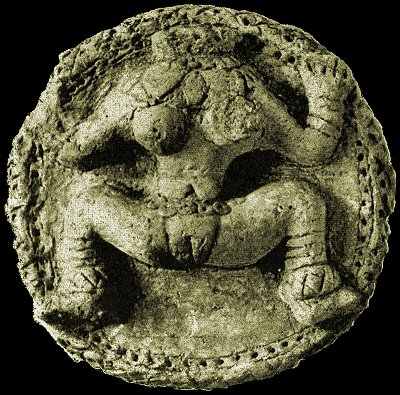
Charting the child’s horoscope at Trymbakeshwar in Nasik district on 30 April 1870 at 8.30 p.m., the father foretells that he will deal insomething white...
At this time, the professor of English at Elphinstone College who is studying Vedic astronomy from Phalke’s father invites him to join the college as a Sanskrit teacher.
By 1870, limelight was replacing the use of oil lamps for light in magic lantern projectors. Limelight was more combustile, but also more effective. It was produced by burning oxygen and hydrogen on a pellet of lime.
Popularity of Kalighat paintings at its peak
[1]
He was a pat painter by lineage, by having learnt his father's occupation. He had moved to Calcutta a few summers ago.
One day a rich patron with a taste for the cheap- he lived with an aged prostitute when he came to Boribazaar for three, sometimes five weeks and more- gifted him a picture of the gods, spectacular, fresh from some new 'press'. The old man liked to transfer some things from his river facing mansion, to the poorer quarters he frequented. He was an alright fellow, really, the old man, he would smile hugely when he shared his second hand goods.
The modern print of Kali lay in the back of the painter's hut, in pride of place. He quite admired it, without wanting to, and felt derisory without wanting to either.
When his dazzled jealousy subsided enough to enable him to look closely, he noticed the pursed lips in the lines, a kind of mendicancy of making. Those small, careful strokes compensated for by the profusion of colours. The colours did not stand out, it seemed like the machines they came from had a way of sinking them INTO the paper, they became the picture.
His own Kali, he thought, was a single line. Continuous as a human hair was the stroke of the hair brush that made it. That was the way with their paintings.
The devi was looking away in anger. Her fury showed like he had never shown her.. It was that look away at someone.. she never looks thus when she looks at you, not in the many idols that make white shadows of the lanes that crowd around the Kali temple.. not in the temple either, does she ever look like this, not in their scrolls. She is somewhere else, in another land, somewhere far away from me.
Not here, she is somewhere.
Which wonderful machine had this strange capacity for dreams, he wondered, to dream up such an uneasy apparition?
The famed Kalighat painters or Calcutta had to seriously contend with the oleograph, the wood-cut print, and the newsheet to make their work viable.
The outlines of the Kalighat paintings were simple, allowing them to be copied in the lithograph presses and then filled in with colour.
(But only with the coming of the chromolithograph was it possible to render the vivid colour in these paintings.)
But the motifs did not only move one way.. while many cheap industrial copies of motifs and paintings developed by the pat artists were made, at the same time, the pat painters began incorporating motifs from these industrially produced pictures, which frequently worked Indian motifs with Western perpectivalism.
---
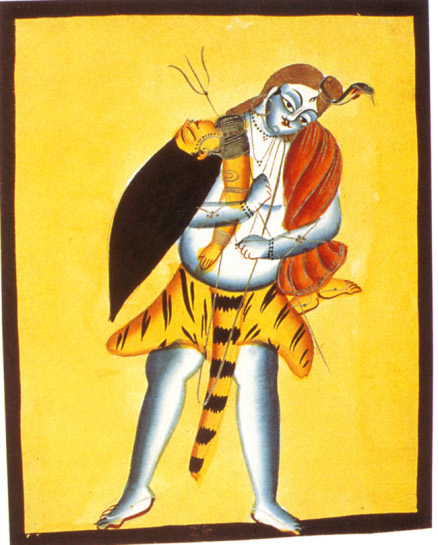 19th century kalighat painting
Jeejeebhoy, Jagannath Shankar Seth, Framjee Cawas, and Ibrahim Magba were at the forefront of nascent Indian capitalism.

Two brothers went looking in opposite directions, for the route of the long cable line that was their joint fate. . One went east, from Sukhumi near the Georgian coast, past Tiflis, Erevan, Dzulfa, Tabris, Teheran, Bushir Karachi, till he reached the Presidency of Calcutta. The other brother went into the Black Sea and out, past Kerch, Odessa, Balta, Vinista, Berdichev, Zhitomir, Warsaw, Berlin, Emden, into the North Sea, into London.
Except in the sea, they kept close to the Railway tracks.. a known technology felt safe when you were bearing the new unknown.
The IndoEuropean Telegraph line comes into operation. [2]


 19th century kalighat painting


![[1]](http://images.google.co.in/imgres?imgurl=http://banglapedia.net/Images/KalighatPainting1.jpg&imgrefurl=http://banglapedia.net/HT/K_0042.HTM&usg=__87hZeL231ZtZF8L8-dAr1C8dNyw=&h=300&w=194&sz=57&hl=en&start=11&um=1&tbnid=5WeePjiDjIjOUM:&tbnh=116&tbnw=75&prev=/images%3Fq%3Dkalighat%2Bpainters%2B19th%2Bcentury%26hl%3Den%26lr%3D%26sa%3DN%26um%3D1)