|
|
| (29 intermediate revisions by the same user not shown) |
| Line 1: |
Line 1: |
| | [[Image:Beham-genious and alphabet.jpg]] | | [[Image:Beham-genious and alphabet.jpg]] |
| | | | |
| − | Phalke was being trained for a career as a Sanskrit scholar
| + | Dada: |
| | + | Six year old Dhundiraj |
| | | | |
| − | He went to swim in the Ganga Godavari. He chopped the waters with his arms and his legs that were gathering strength, and laughed as he heard the water break away in pieces and fly, far from him.
| + | Babaraya: |
| − | He was a frog in a large river, exulting in the small, sharp sound of his presence. Then he saw her.
| + | You! |
| − | [[Image:Ganga2.jpg]]
| |
| | | | |
| − | [[Lord Lytton]]
| + | Dada: |
| | + | Six year old Dhundiraj is being trained for a career as a Sanskrit scholar. He is learning the grammar of an ancient language, and its verses. |
| | | | |
| − | [[Famine]] between 1976-78. Bombay affected seriously
| + | One day, he goes to swim in the Ganga Godavari. He chops the waters with his arms and legs that are gathering strength |
| | | | |
| − | [[Image:Famine report.jpg]] | + | [[Suhas Parve]] |
| | | | |
| | | | |
| − | At the same time Lytton introduced a Custom duty on textile goods exported to England.
| + | Late evening, Sarasvati is writing in the book, Quite unaware even of her, back to her, Prabhkar is sitting like an adult, in Phalke's chair, telling the story. The others are not around. |
| | + | |
| | | | |
| − | Dramatic Performances Act, 1876. Restriction on subversive, anti state content in performance
| + | Prabhakar: |
| − | ----------
| + | He jumps into the water like a frog. |
| − | The father and son are bathing in [[the river]]. The father recites [[purush shastra]], and the son repeats. They hold their noses and plunge into the water, the river flowing over their heads. When father emerges, child is out of sight. Father anxiously looks for him, calls. Terror. Then suddenly son emerges at a distance. Father is angry. Walks out of the water. Son runs after him. Father pleads with him not to touch him.
| + | He laughs as he hears the water break and fly away. |
| | | | |
| − | -------
| + | Saraswati writes: |
| − | [[Shri Trymbakeshwar Jyotirlinga]]
| + | He is a frog in a large river, the sun warms his skin. |
| | | | |
| − | What do the learned books say about the mystery of the jyotirlinga?
| + | That is when he sees her.. the most beautiful woman he has ever seen, far more beautiful than even his mother, resplendent with jewellery like you have never seen on this earth, pearls like falling drops of milk, gold from the heels of the sun. She was smiling where she sat on the back of a river crocodile. His jaws were snapping, hers were laughing as she felt the breeze in her open hair, and the waters lapped at her toes. She dug her knee into the flank of her crocodile and he raced. He saw her, the most beautiful doll he had ever seen, in the distance and then, she disappeared.. |
| − | Because the word 'jyotirlinga' talks of light, and the word linga expresses both creation and destruction. Because the word 'linga' has two roots, one is drawing,form, and the other is movement.
| + | Dhundi had been watching with his mouth open like a river frogs'.. now he ducked and went underwater. He sank, further and further into the water, he stood stock still, watching the reeds move, staring, willing them to become e the crocodile's tail, so he could see her again. |
| − | From the invisible, to a sense of the immanent, to the visible. In other words, for the darkness to open out of itself the multifarious forms of the visible world.
| + | [[Image:Ganga2.jpg]] |
| | | | |
| − | --------------
| + | Prabhakar closes his eyes, very much like his father does. |
| | | | |
| − | As soon as the five forhead like crowns were removed from the face of the Jyotirlinga, the lamps sprung to light. The light started radiating outwards. The doors of the temple began to open. Several invisible hands began ringing the temple bells. His little sister ran after Dhunidraj in that courtyard surrounded by freshly limed walls. Dhundiraj entered the temple and stood there, quietly. Kamala was standing a little distance away, with her family. He picked up a piece of coal and said, Come, let me show you how I make a horse. They both ran into the silence of the temple. He drew the horse without lifting his hand even once. He stepped back from the wall to look at the horse he had made. Behind him, Kamala looked on with astonished eyes.
| + | Prabhakar: |
| | + | One day he will see her again. When his skin is hanging over his eyes like a curtain, her sight will lift the curtain, and Ganga will ride the river of his mind. |
| | | | |
| − | When they turned back, his sister was complaining to Shivram.
| + | ------------- |
| − | Sister: Look, Kaka has blackened the wall again. I really dislike this, this is not a school yard! Dhundi got scared and said, I won't do it again. But Kaka said, It is beautiful and it seemed like a wave had turned the moment around.
| |
| | | | |
| | + | Dada is on the same chair, he is looking at a strip of film, from one of his own films. He runs it on the table, with a glass counter and a light source below. In that small rectangle, a large river seems to move from within, we can see the current. Two devis, the river goddesses, appear on it. |
| | | | |
| | + | Dada: |
| | | | |
| − | -----
| + | Your tata and I were bathing in [[the river]] once. In this very river. See.. |
| − | [[Image:Virabhadra, one of the incarnations of Shiva, accompained by a dog, Karnataka.jpg]] | |
| | | | |
| | + | The father recites [[purush shastra]], and the son repeats. We hold our noses and plunge into the water, the river flowing over their heads. When father emerges, child is out of sight. Father anxiously looks for him, calls. Terror. Then suddenly son emerges at a distance. Father is angry. Walks out of the water. Son runs after him. Father pleads with him not to touch him. |
| | | | |
| − | Image of Bhairava from Vidarbha, 19th century
| + | Sarasvati Bai writes out a section of the Purush Shastra, carefully copying it. |
| | | | |
| − | -------- | + | Sarasvati Bai thinks: This language is unknown to me, the alphabets are alien. |
| | + | ------- |
| | + | तू दिन भर इसी शिला के पास रहेगा कहीं जायेगा नहीं. क्यों, तू राजी है? दिन भर तुझे एक ही बात सोचनी होगी. तू अपने घर के विषय के बारे में सोचेगा. अपने घर के सभी लोगों के चहरे याद करेगा. सगे सम्बन्धी. मित्र आदि को नहीं. उन सबका स्मरण कर अपनी कल्पना में घरवालों के साथ सम्बन्ध स्थापित करने की चेष्टा करना. ठीक है. कल फिर यहीं पहुँच जाना फिर बात होगी |
| | + | ------ |
| | | | |
| − | April 8, 1876. Bell gets the patent for the telephone. Patent list from the newspaper "Scientific American" where it is listed at Telegraphy
| + | [[Image:Virabhadra, one of the incarnations of Shiva, accompained by a dog, Karnataka.jpg]] |
| | | | |
| − | [[Image:Bell-telephone-patent-numbers.jpg]]
| |
| | | | |
| | + | Image of Bhairava from Vidarbha, 19th century |
| | | | |
| | + | [[Shri Trymbakeshwar Jyotirlinga]] |
| | | | |
| | + | Dada dictates: |
| | | | |
| − | {{yearbox|
| + | What do the learned books say about the mystery of the jyotirlinga? |
| − | | in?=
| + | Because the word 'jyotirlinga' talks of light, and the word linga expresses both creation and destruction. Because the word 'linga' has two roots, one is drawing,form, and the other is movement. |
| − | | cp=18th century
| + | From the invisible, to a sense of the immanent, to the visible. In other words, for the darkness to open out of itself the multifarious forms of the visible world. |
| − | | c=19th century
| |
| − | | cf=20th century
| |
| | | | |
| − | | yp1=1873
| + | -------------- |
| − | | yp2=1874
| |
| − | | yp3=1875
| |
| − | | year=1876
| |
| − | | ya1=1877
| |
| − | | ya2=1878
| |
| − | | ya3=1879
| |
| | | | |
| − | | dp3=1840s
| + | [[Lord Lytton]] |
| − | | dp2=1850s
| |
| − | | dp1=1860s
| |
| − | | d=1870s
| |
| − | | dn1=1880s
| |
| − | | dn2=1890s
| |
| − | | dn3=1900s
| |
| − | }}
| |
| − | {{C19YearInTopic}}
| |
| − | '''1876''' ('''[[Roman numerals|MDCCCLXXVI]]''') was a [[leap year starting on Saturday]].
| |
| | | | |
| − | ==Events==
| + | [[Famine]] between 1976-78. Bombay affected seriously |
| − | ===January-March===
| |
| − | * [[Chinese New Year]] of the [[Fire Rat]] begins.
| |
| − | * [[January 31]] - [[United States]] orders all [[Indigenous peoples in the United States|Native Americans]] to move into reservations.
| |
| − | * [[February 2]] - The [[National League|National League of Professional Baseball Clubs]] of [[Major League Baseball]] is formed.
| |
| − | * [[February 3]] - [[Paraguay]] makes peace with [[Argentina]] after the [[War of the Triple Alliance]].
| |
| − | * [[February 14]] - [[Alexander Graham Bell]] applies for a [[patent]] for the [[telephone]].
| |
| − | * [[February 22]] - [[Johns Hopkins University]] founded in [[Baltimore, Maryland]].
| |
| − | * [[March 7]] - [[Alexander Graham Bell]] is granted a patent for an invention he calls the [[telephone]] (patent # 174,465).
| |
| − | * [[March 10]] - [[Alexander Graham Bell]] makes the first successful [[telephone]] call by saying "Mr. Watson, come here, I want you."
| |
| | | | |
| − | ===April-June===
| + | [[Image:Famine report.jpg]] |
| − | * [[April 16]] - [[Bulgaria]]n [[April uprising]]
| |
| − | * [[April 17]] - Six [[Fenians|Fenian]] prisoners escape from a penal colony in [[Fremantle, Western Australia|Fremantle]], [[Australia]] with the aid of ship [[Catalpa rescue|Catalpa]].
| |
| − | * [[May 1]] - Turks crush uprising of Bulgar Slavs
| |
| − | * [[May 11]]-[[May 12]] - [[Berlin Memorandum]] - Germany, Russia and Austria-Hungary propose an armistice between Turkey and its [[insurgent]]s
| |
| − | * [[May 16]] - British prime minister [[Benjamin Disraeli]] rejects [[Berlin Memorandum]]
| |
| − | * [[May 18]] - [[Wyatt Earp]] starts work in [[Dodge City, Kansas]], serving under [[Marshal]] Larry Deger
| |
| − | * [[May 30]] - [[Abd-ul-Aziz]], [[List of Ottoman Sultans|Sultan]] of the [[Ottoman Empire]] is deposed and succeeded by his nephew [[Murat V]].
| |
| − | * [[June 4]] - An express [[railroad|train]] called the [[Transcontinental Express]] arrives in [[San Francisco, California]] via the [[First Transcontinental Railroad (North America)|First Transcontinental Railroad]] only 83 hours and 39 minutes after having left [[New York City]].
| |
| − | * [[June 17]] - [[Indian Wars]]: [[Battle of the Rosebud]] - 1,500 [[Sioux]] and [[Cheyenne]] led by [[Crazy Horse]] beat back General [[George Crook]] forces at Rosebud Creek in [[Montana Territory]].
| |
| − | * [[June 25]] - Indian Wars: [[Battle of the Little Bighorn]]. [[Lieutenant colonel]] [[George Armstrong Custer]] of the [[US 7th Cavalry Regiment]] leads a unit of 300 men in battle against the allied forces of [[Lakota]], [[Cheyenne]] and [[Arapaho]], counting 5000 men under the leadership of [[Sitting Bull]] and [[Crazy Horse]]. The latter emerge victorious.
| |
| | | | |
| − | ===July-September===
| + | --------------------------------- |
| − | * [[July 1]] - [[Serbia]] [[Declaration of war|declares]] war on [[Turkey]]
| |
| − | * [[July 2]] - [[Montenegro]] declares war on [[Turkey]]
| |
| − | * [[July 4]] - [[United States Centennial]] See: [http://fax.libs.uga.edu/T825xB1xI5/ ''Centennial exposition described and illustrated''], being a concise and graphic description of this grand enterprise commemorative of the first centennary of American independence. Publisher: Philadelphia, Hubbard bros, 1876.
| |
| − | * [[July 8]] - [[Reichstadt Agreement]] between Russia and Austria-Hungary on partitioning the Balkan peninsula.
| |
| − | *[[July 13]] - The prosecution of [[Arthur Tooth]], an [[Anglican]] [[clergyman]], for using [[Ritualism|ritualist]] practices begins.
| |
| − | * [[August 1]] - [[Colorado]] is admitted as the 38th [[U.S. state]].
| |
| − | * [[August 8]] - [[Thomas Edison]] receives a patent for his [[mimeograph]].
| |
| − | * [[August 31]] - [[Murat V]], [[List of Ottoman Sultans|Sultan]] of the [[Ottoman Empire]] is deposed and succeeded by his brother [[Abdul Hamid II]].
| |
| − | * [[September 5]] - [[William Ewart Gladstone|Gladstone]] publishes ''Bulgarian Horrors'' pamphlet
| |
| − | * [[September 7]] - In [[Northfield, Minnesota]], [[Jesse James 1847|Jesse James]] and the [[James-Younger Gang]] attempt to rob the town's bank but are surrounded by an angry mob and are nearly wiped out.
| |
| | | | |
| − | ===October-December===
| + | At the same time Lytton introduced a Custom duty on textile goods exported to England. |
| − | * [[October 4]] - Texas A&M University, the state’s first public institution of higher education, opened on October 4, 1876 as the Agricultural and Mechanical College of Texas.
| |
| − | * [[October 31]] - Catastrophic [[cyclone]] strikes the east coast of [[India]]. 200,000 people lose their lives.
| |
| − | * [[November 2]] - [[Atlantic giant squid]] 6.1 meters long washes ashore in [[Thimble Tickle Bay]] in [[Canada]]
| |
| − | * [[November 21]] - [[Porfirio Diaz]] arrives in [[Mexico City]] and takes power
| |
| − | * [[November 7]] - [[U.S. presidential election, 1876|U.S. presidential election]] is held. After long and heated disputes, [[Rutherford B. Hayes|Rutherford Birchard Hayes]] would be declared the winner over [[Samuel Jones Tilden]].
| |
| − | * [[November 7]] - [[Green Clay Smith]] ran as presidential candidate of [[Prohibition Party]].
| |
| − | * [[November 7]] - [[Samuel Fenton Cary]] ran as vice-presidential candidate of Greenback Party.
| |
| − | * [[November 23]] - Corrupt [[Tammany Hall]] leader William Marcy Tweed (better known as [[Boss Tweed]]) is delivered to authorities in [[New York City]] after being captured in [[Spain]].
| |
| − | * [[November 25]] - [[Indian Wars]]: In retaliation for the dramatic [[United States|American]] defeat at the [[Battle of the Little Bighorn]], [[United States Army]] troops under General [[Ranald S. Mackenzie]] sack [[Chief Dull Knife]]'s sleeping [[Cheyenne]] village at the headwaters of the [[Powder River (Montana)|Powder River]] (the soldiers destroyed all of the villager's winter food and clothing and then slashed their ponies' throats).
| |
| − | *[[November 29]] - [[Porfirio Díaz]] becomes President of [[Mexico]].
| |
| − | * [[December 5]] - Fire in theater in [[Brooklyn]], [[New York City]], kills more than 300
| |
| − | * [[December 23]] - [[Conference of Constantinople]] about Ottoman treatment of its ethnic minorities begins
| |
| − | * [[December 29]] - The [[Ashtabula River Railroad Disaster|Ashtabula River Railroad bridge disaster]], 64 injured, 92 dead at [[Ashtabula, Ohio]].
| |
| | | | |
| − | ===Unknown dates===
| + | Dramatic Performances Act, 1876. Restriction on subversive, anti state content in performance |
| − | * [[Charles Wells]] opened his [[brewery]] based in [[Bedford]], England.
| + | April 8, 1876. Bell gets the patent for the telephone. Patent list from the newspaper "Scientific American" where it is listed at Telegraphy |
| − | * [[Spandau Prison]] finished
| |
| − | * Invention of the [[four-stroke cycle]] internal combustion engine by [[Nikolaus Otto]]
| |
| − | * United States of America [[Centennial Exposition]] in [[Philadelphia]]
| |
| − | * [[Samurai]] are banned from carrying swords in [[Japan]].
| |
| − | * [[Harvard Lampoon]] founded.
| |
| − | * [[Heinz Ketchup]] introduced.
| |
| − | * The [[Conchological Society of Great Britain & Ireland]] founded.
| |
| | | | |
| − | ==Births==
| + | [[Image:Bell-telephone-patent-numbers.jpg]] |
| − | ===January-March===
| |
| − | * [[January 5]] - [[Konrad Adenauer]], [[Chancellor of Germany]] (d. [[1967]])
| |
| − | * [[January 11]] - [[Elmer Flick]], baseball player (d. [[1971]])
| |
| − | * [[January 12]] - [[Ermanno Wolf-Ferrari]], Italian composer (d. [[1948]])
| |
| − | * [[January 12]] - [[Jack London]], American author (d. [[1916]])
| |
| − | * [[January 20]] - [[Józef Hofmann]], Polish pianist (d. [[1967]])
| |
| − | * [[January 23]] - [[Otto Diels]], German chemist, [[Nobel Prize in Chemistry|Nobel Prize]] laureate (d. [[1954]])
| |
| − | * [[January 29]] - [[Havergal Brian]], British composer (d. [[1972]])
| |
| − | * [[February 12]] - [[Thubten Gyatso, 13th Dalai Lama|Thubten Gyatso]], 13th [[Dalai Lama]] (d. [[1933]])
| |
| − | * [[February 19]] - [[Constantin Brancusi]], Romanian sculptor (d. [[1957]])
| |
| − | * [[March 1]] - [[Henri de Baillet-Latour]], Belgian International Olympic Committee president (d. [[1942]])
| |
| − | * [[March 2]] - [[Pope Pius XII]] (d. [[1958]])
| |
| − | * [[March 4]] - [[Léon-Paul Fargue]], French poet (d. [[1947]])
| |
| − | * [[March 11]] - [[Carl Ruggles]], British composer (d. [[1971]])
| |
| − | * [[March 21]] - [[John Tewksbury]], American athlete (d. [[1968]])
| |
| − | | |
| − | ===April-September===
| |
| − | * [[April 4]] - [[Maurice de Vlaminck]], French painter and poet (d. [[1958]])
| |
| − | * [[April 11]] - [[Paul Henry (painter)|Paul Henry]], Irish artist (d. [[1958]])
| |
| − | * [[April 22]] - [[Robert Bárány]], Hungarian physician, recipient of the [[Nobel Prize in Physiology or Medicine]] (d. [[1936]])
| |
| − | *[[May 18]] - [[Hermann Müller (politician)|Hermann Müller]], [[Chancellor of Germany]] (d. [[1931]])
| |
| − | * [[June 5]] - [[Tony Jackson]], American jazz musician (d. [[1920]])
| |
| − | * [[June 13]] - [[William Sealy Gosset]], English chemist (d. [[1937]])
| |
| − | *[[July 2]] - [[Wilhelm Cuno]], [[Chancellor of Germany]] (d. [[1933]])
| |
| − | * [[July 12]] - [[Max Jacob]], French poet (d. [[1944]])
| |
| − | * [[July 19]] - [[Joseph Fielding Smith (1876-1972)|Joseph Fielding Smith]], president of [[Church of Jesus Christ of Latter Day Saints|The Church of Jesus Christ of Latter-day Saints]] (d. [[1972]])
| |
| − | * [[August 7]] - [[Mata Hari]], exotic dancer and spy (d. [[1917]])
| |
| − | *[[September 6]] - [[John James Richard Macleod]], Scottish-born physician and physiologist, [[Nobel Prize in Physiology or Medicine|Nobel Prize]] laureate (d. [[1935]])
| |
| − | * [[September 15]] - [[Bruno Walter]], German conductor (d. [[1962]])
| |
| − | * [[September 16]] - [[Marvin Hart]], boxer (d. [[1931]])
| |
| − | * [[September 18]] - [[James Scullin]], ninth [[Prime Minister of Australia]] (d. [[1953]])
| |
| − | * [[September 26]] - [[Edith Abbott]], social worker, educator, and author (d. [[1957]])
| |
| − | * [[September 29]] - [[Nicholas Kandel]], bandit, pillager (d. [[1955]])
| |
| | | | |
| − | ===October-December===
| + | ---------------------------- |
| − | * [[October 13]] - [[Rube Waddell]], [[Baseball Hall of Fame]]r (d. [[1914]])
| + | They fly over fields, hills with trees on them, and then over a low meadow. Dada points excitedly: |
| − | * [[November 7]] - [[Charlie Townsend]], English cricketer (d. [[1958]])
| |
| − | * [[November 7]] - [[Culbert Olson]], Governor of California (d. [[1962]])
| |
| − | * [[November 17]] - [[August Sander]], German photographer (d. [[1964]])
| |
| − | * [[November 23]] - [[Manuel de Falla]], Spanish composer (d. [[1946]])
| |
| − | * [[November 24]] - [[Walter Burley Griffin]], American architect (d. [[1937]])
| |
| − | * [[December 9]] - [[Berton Churchill]], Canadian actor (d. [[1940]])
| |
| − | * [[December 12]] - [[Alvin Kraenzlein]], American athlete (d. [[1928]])
| |
| − | * [[December 21]] - [[Jack Lang (Australia)|Jack Lang]], Australian politician (d. [[1975]])
| |
| − | * [[December 25]] - [[Muhammad Ali Jinnah]], founder of Pakistan (d. [[1948]])
| |
| − | * [[December 25]] - [[Adolf Otto Reinhold Windaus]], German chemist, [[Nobel Prize in Chemistry|Nobel Prize]] laureate (d. [[1959]])
| |
| − | * [[December 29]] - [[Pablo Casals]], Catalan cellist (d. [[1973]])
| |
| − | * [[Alfred Stock]], German chemist (d. [[1946]])
| |
| | | | |
| − | ===Unknown date===
| + | Dada: |
| − | * [[Alfred S. Alschuler]], American architect (d. [[1940]])
| |
| | | | |
| − | ==Deaths==
| + | [[Shakuntala Patralekhan]]. |
| − | * [[January 14]] - [[Jean Auguste Dominique Ingres]], French painter (b. [[1780]])
| |
| − | * [[February 18]] - [[Charlotte Cushman]], American stage actress (b. [[1816]])
| |
| − | * [[May 26]] - [[František Palacký]], Czech historian and politician (b. [[1798]])
| |
| − | * [[June 21]] - [[Antonio López de Santa Anna]], [[President of Mexico]] (b. [[1794]])
| |
| − | * [[June 25]] - [[George Armstrong Custer]], U.S. officer (killed in battle) (b. [[1839]])
| |
| − | * [[August 2]] - [[Wild Bill Hickok]], American gunfighter and entertainer (b. [[1837]])
| |
| − | * [[October 1]] - [[James Lick]], American land baron (b. [[1796]])
| |
| − | * [[Abd al-Aziz]], [[Ottoman Sultan]] (b. [[1830]])
| |
| | | | |
| − | ==Other==
| + | A full bodied maiden lies on green grass, by the statue of an overwatching Englishman. One of her legs lifts at the knee, her foot strokes the air, her hand stays poised over a sheet of paper. Her neck has turned back in thought, her eyes bend down, her lips swing up. Her pupils, now at the bottom of those rolled back eyes, seem to be staring sightlessly at Dada. Dada looks back before leaving the window. |
| − | *1876 was also the year that sports club [[Académica de Coimbra]], from [[Coimbra]], [[Portugal]], was founded
| |
| − | *1876 was also the year that football club Port Vale FC were formed
| |
| | | | |
| − | [[Category:1876]]
| + | Dada: |
| | | | |
| − | [[af:1876]]
| + | The Governor of Madras himself bought the painting from the Madras Fine Arts Exhibition. |
| − | [[ar:1876]]
| + | ---------------------- |
| − | [[ast:1876]]
| + | हरा पानी छँटता है, पहले सूजे हुवे हरे पाँव दिखते हेँ, फिर एकजापानी बाबाके चहरे पर लगी छोटी मोती सी आँखें तुम्हें चौंका देती हैं, पानी में यून ही रुकी हुवी साँस फूलने लगती है और त्यों ही उसकी पीठ से लगा उसका पत्थर का घर भी नीचे उतरता है.. कुछ समय बालक और कुश्यप एक दूसरे के पास लहराते हैं, फिर बालक अपने हाथ पैरों की डालओं को ज़ोर देता हुवा पानी की सतह तोड़ अपने घर की ओर दौड़ता है. |
| − | [[az:1876]]
| + | ------------ |
| − | [[bg:1876]]
| + | in the studio- Phalke reading the Natya Shastra commentaries that are getting published ( are they?) discussing with actors |
| − | [[be:1876]]
| |
| − | [[bs:1876]]
| |
| − | [[ca:1876]]
| |
| − | [[cv:1876]]
| |
| − | [[cs:1876]]
| |
| − | [[cy:1876]]
| |
| − | [[da:1876]]
| |
| − | [[de:1876]]
| |
| − | [[et:1876]]
| |
| − | [[el:1876]]
| |
| − | [[es:1876]]
| |
| − | [[eo:1876]]
| |
| − | [[eu:1876]]
| |
| − | [[fr:1876]]
| |
| − | [[fy:1876]]
| |
| − | [[ga:1876]]
| |
| − | [[gl:1876]]
| |
| − | [[ko:1876년]]
| |
| − | [[hr:1876]]
| |
| − | [[io:1876]]
| |
| − | [[id:1876]]
| |
| − | [[ia:1876]]
| |
| − | [[is:1876]]
| |
| − | [[it:1876]]
| |
| − | [[he:1876]]
| |
| − | [[ka:1876]]
| |
| − | [[csb:1876]]
| |
| − | [[la:1876]]
| |
| − | [[lt:1876]]
| |
| − | [[lb:1876]]
| |
| − | [[hu:1876]]
| |
| − | [[mk:1876]]
| |
| − | [[ms:1876]]
| |
| − | [[nap:1876]]
| |
| − | [[nl:1876]]
| |
| − | [[no:1876]]
| |
| − | [[nn:1876]]
| |
| − | [[os:1876]]
| |
| − | [[pl:1876]]
| |
| − | [[pt:1876]]
| |
| − | [[ro:1876]]
| |
| − | [[ru:1876]]
| |
| − | [[sq:1876]]
| |
| − | [[scn:1876]]
| |
| − | [[simple:1876]]
| |
| − | [[sk:1876]]
| |
| − | [[sl:1876]]
| |
| − | [[sr:1876]]
| |
| − | [[fi:1876]]
| |
| − | [[sv:1876]]
| |
| − | [[tt:1876]]
| |
| − | [[th:พ.ศ. 2419]]
| |
| − | [[tr:1876]]
| |
| − | [[uk:1876]]
| |
| − | [[wa:1876]]
| |
| − | [[zh:1876年]]
| |
Dada:
Six year old Dhundiraj
Babaraya:
You!
Dada:
Six year old Dhundiraj is being trained for a career as a Sanskrit scholar. He is learning the grammar of an ancient language, and its verses.
One day, he goes to swim in the Ganga Godavari. He chops the waters with his arms and legs that are gathering strength
Suhas Parve
Late evening, Sarasvati is writing in the book, Quite unaware even of her, back to her, Prabhkar is sitting like an adult, in Phalke's chair, telling the story. The others are not around.
Prabhakar:
He jumps into the water like a frog.
He laughs as he hears the water break and fly away.
Saraswati writes:
He is a frog in a large river, the sun warms his skin.
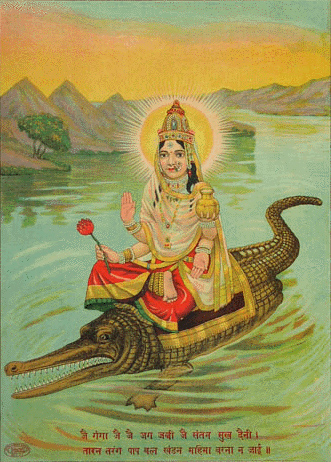
That is when he sees her.. the most beautiful woman he has ever seen, far more beautiful than even his mother, resplendent with jewellery like you have never seen on this earth, pearls like falling drops of milk, gold from the heels of the sun. She was smiling where she sat on the back of a river crocodile. His jaws were snapping, hers were laughing as she felt the breeze in her open hair, and the waters lapped at her toes. She dug her knee into the flank of her crocodile and he raced. He saw her, the most beautiful doll he had ever seen, in the distance and then, she disappeared..
Dhundi had been watching with his mouth open like a river frogs'.. now he ducked and went underwater. He sank, further and further into the water, he stood stock still, watching the reeds move, staring, willing them to become e the crocodile's tail, so he could see her again.
Prabhakar closes his eyes, very much like his father does.
Prabhakar:
One day he will see her again. When his skin is hanging over his eyes like a curtain, her sight will lift the curtain, and Ganga will ride the river of his mind.
Dada is on the same chair, he is looking at a strip of film, from one of his own films. He runs it on the table, with a glass counter and a light source below. In that small rectangle, a large river seems to move from within, we can see the current. Two devis, the river goddesses, appear on it.
Dada:
Your tata and I were bathing in the river once. In this very river. See..
The father recites purush shastra, and the son repeats. We hold our noses and plunge into the water, the river flowing over their heads. When father emerges, child is out of sight. Father anxiously looks for him, calls. Terror. Then suddenly son emerges at a distance. Father is angry. Walks out of the water. Son runs after him. Father pleads with him not to touch him.
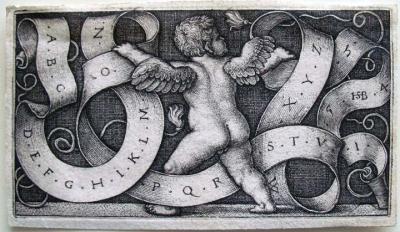
Sarasvati Bai writes out a section of the Purush Shastra, carefully copying it.
Sarasvati Bai thinks: This language is unknown to me, the alphabets are alien.
तू दिन भर इसी शिला के पास रहेगा कहीं जायेगा नहीं. क्यों, तू राजी है? दिन भर तुझे एक ही बात सोचनी होगी. तू अपने घर के विषय के बारे में सोचेगा. अपने घर के सभी लोगों के चहरे याद करेगा. सगे सम्बन्धी. मित्र आदि को नहीं. उन सबका स्मरण कर अपनी कल्पना में घरवालों के साथ सम्बन्ध स्थापित करने की चेष्टा करना. ठीक है. कल फिर यहीं पहुँच जाना फिर बात होगी
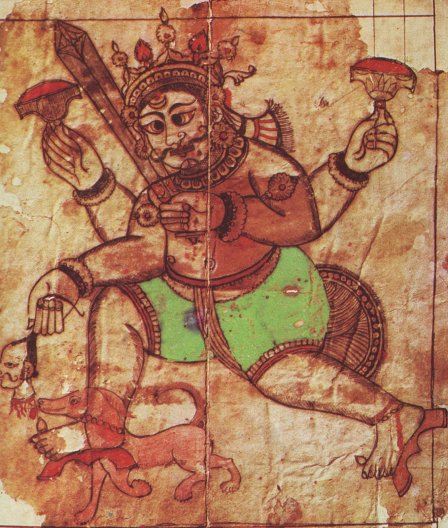
Image of Bhairava from Vidarbha, 19th century
Shri Trymbakeshwar Jyotirlinga
Dada dictates:
What do the learned books say about the mystery of the jyotirlinga?
Because the word 'jyotirlinga' talks of light, and the word linga expresses both creation and destruction. Because the word 'linga' has two roots, one is drawing,form, and the other is movement.
From the invisible, to a sense of the immanent, to the visible. In other words, for the darkness to open out of itself the multifarious forms of the visible world.
Lord Lytton
Famine between 1976-78. Bombay affected seriously
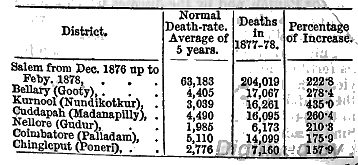
At the same time Lytton introduced a Custom duty on textile goods exported to England.
Dramatic Performances Act, 1876. Restriction on subversive, anti state content in performance
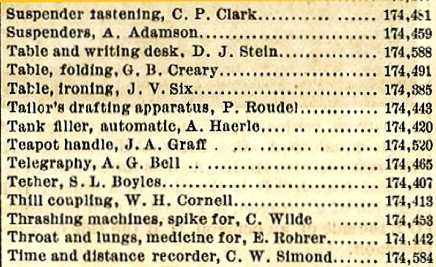
April 8, 1876. Bell gets the patent for the telephone. Patent list from the newspaper "Scientific American" where it is listed at Telegraphy
They fly over fields, hills with trees on them, and then over a low meadow. Dada points excitedly:
Dada:
Shakuntala Patralekhan.
A full bodied maiden lies on green grass, by the statue of an overwatching Englishman. One of her legs lifts at the knee, her foot strokes the air, her hand stays poised over a sheet of paper. Her neck has turned back in thought, her eyes bend down, her lips swing up. Her pupils, now at the bottom of those rolled back eyes, seem to be staring sightlessly at Dada. Dada looks back before leaving the window.
Dada:
The Governor of Madras himself bought the painting from the Madras Fine Arts Exhibition.
हरा पानी छँटता है, पहले सूजे हुवे हरे पाँव दिखते हेँ, फिर एकजापानी बाबाके चहरे पर लगी छोटी मोती सी आँखें तुम्हें चौंका देती हैं, पानी में यून ही रुकी हुवी साँस फूलने लगती है और त्यों ही उसकी पीठ से लगा उसका पत्थर का घर भी नीचे उतरता है.. कुछ समय बालक और कुश्यप एक दूसरे के पास लहराते हैं, फिर बालक अपने हाथ पैरों की डालओं को ज़ोर देता हुवा पानी की सतह तोड़ अपने घर की ओर दौड़ता है.
in the studio- Phalke reading the Natya Shastra commentaries that are getting published ( are they?) discussing with actors


