|
|
| (20 intermediate revisions by the same user not shown) |
| Line 1: |
Line 1: |
| − | We photograph things to drive them out of our minds. My stories are my way of shutting my ears: Kafka.
| + | Dada: |
| | + | |
| | + | If I were to tell you the story of when I was thirteen, I would like to tell a story of the pictures I saw and collected, some in my notebook, so many neatly filed away in my mind. Because in my mind there are bookshelves, with thin paper folders for pictures, and everything is filed away, carefully, nothing is lost. |
| | + | Bombay was a city of boxes, I told you.. house boxes, theatre boxes, and the small beautiful match boxes with pictures on them. |
| | + | The wonder of paper, how much you children take it for granted, the way your books look, how my throat catches when I see you crumpling a sheet and throwing it away so easily, you, Prabhkar, especially. |
| | + | |
| | + | Bombay was the city of paper, and pictures on paper, and words on paper and I collected them, things that the household in Dadar would throw away, I kept everything, carefully. |
| | + | I would look at the grain on the paper, it looked like sand, like a sprinkling of rain over the sea. The same rain falls on film, have you seen it? |
| | | | |
| | + | What I missed about my hometown was the charcoal. That made paper of the walls and the ground around me. Limited paper, so I soon learnt to draw well. Hold the coal down on the wall and complete the picture in one stroke. I would do the same on paper, in Dadar, at school, at my work. Everything was precise, it has to be so. It is the virtue of scarcity. |
| | | | |
| − | [[Atomic Theory of electricity]].
| |
| − | A proposal that electric and magnetic fields filled the void.
| |
| | | | |
| − | [[Image:Electo magnet.jpg]]
| + | Like an alphabet leaves an impression on paper, an image must leave an impression on the mind that sees. The wood engraving must be stamped on the soft matter of the human brain. The painter's brush must paint her lines there. |
| | + | The rule that decides whether an image will live, is its ability to leave its mark: only those images that leave their mark and slowly dissolve into the blood of the viewer, changing its chemical composition, survive. |
| | | | |
| − | From this came many proposals- can not we plug into this all pervasive energy in the air? Nikolas Tesla was to ask.
| |
| | | | |
| − | Rayon
| + | Printing presses were proliferating in the 80's, trying to update themselves with new sorceries to draw watching eyes towards the image. Once the eye was absorbed, the image was able to travel the distance into the darkness that lay behind those watching eyes, to become mind, to float there and look back saucily at the lamp that lit those labyrinthine corridors from time to time. |
| | | | |
| | + | ------------------ |
| | | | |
| − | Brooklyn Bridge
| + | We photograph things to drive them out of our minds. My stories are my way of shutting my ears: Kafka. |
| | | | |
| | + | [[Image:1st-brownie.jpg]] [[Image:Bombay photographic company kalba devi road.gif]] |
| | | | |
| | + | [[Atomic Theory of electricity]]. |
| | | | |
| | + | A proposal that electric and magnetic fields filled the void. |
| | | | |
| − | {{yearbox|
| + | [[Image:Electo magnet.jpg]] |
| − | | in?=
| |
| − | | cp=18th century
| |
| − | | c=19th century
| |
| − | | cf=20th century
| |
| | | | |
| − | | yp1=1880
| + | From this came many proposals- can not we plug into this all pervasive energy in the air? and run our civilisation on this endless resource? [[Nikolas Tesla]][http://www.hbci.com/~wenonah/new/tesla.htm] was to ask. |
| − | | yp2=1881
| |
| − | | yp3=1882
| |
| − | | year=1883
| |
| − | | ya1=1884
| |
| − | | ya2=1885
| |
| − | | ya3=1886
| |
| | | | |
| − | | dp3=1850s
| + | Rayon |
| − | | dp2=1860s
| |
| − | | dp1=1870s
| |
| − | | d=1880s
| |
| − | | dn1=1890s
| |
| − | | dn2=1900s
| |
| − | | dn3=1910s
| |
| − | }}
| |
| − | {{C19YearInTopic}}
| |
| | | | |
| − | '''1883''' ('''[[Roman numerals|MDCCCLXXXIII]]''') was a [[common year starting on Monday]] (see link for calendar).
| |
| | | | |
| − | ==Events==
| + | Brooklyn Bridge |
| − | * [[January 10]] - A fire at the [[Newhall Hotel]] in [[Milwaukee]] kills 71
| |
| − | * [[January 16]] - The [[Pendleton Civil Service Reform Act]], establishing the [[United States]] [[Civil service]], is passed
| |
| − | * [[January 19]] - The first electric lighting system employing overhead wires begins service ([[Roselle, New Jersey]]) It was built by [[Thomas Edison]].
| |
| − | * [[February 16]] - ''[[Ladies Home Journal]]'' is published for the first time.
| |
| − | * [[February 23]] - [[Alabama]] becomes the first [[U.S. state]] to enact an [[antitrust law]].
| |
| − | * [[February 28]] - The first [[vaudeville]] theater is opened, in [[Boston, Massachusetts]].
| |
| − | * [[March]] - An Australian Catholic school, [[Star of the Sea College]] is founded in [[Elsternwick, Victoria]] (now known as [[Gardenstown, Victoria|Gardenstown]]) by the [[Ireland|Irish]] [[Presentation Sisters]].
| |
| − | * [[May 24]] - [[Brooklyn Bridge]] is opened to traffic after 14 years of construction.
| |
| − | * [[May 30]] - In [[New York City]], a rumor that the [[Brooklyn Bridge]] was going to collapse causes a stampede which crushes twelve people.
| |
| − | * [[June 30]] - First appearance of ''[[The Black Arrow]]'' by [[Robert Louis Stevenson]] as a serial in ''Young Folks; A Boys' and Girls' Paper of Instructive and Entertaining Literature''. Stevenson would complete the novel at the end of summer in France.
| |
| − | * [[July 3]] - ''[[SS Daphne]]'' disaster in [[Glasgow]] leaves 124 dead.
| |
| − | * [[July 4]] - Worlds first [[rodeo]] held in [[Pecos, TX]].
| |
| − | * [[July 22]] – [[Zulu]] king [[Cetshwayo]] barely escapes rebel attack with his life.
| |
| − | * [[August]] - [[King William's College]] is opened on the [[Isle of Man]].
| |
| − | * [[August 12]] - The last [[quagga]] dies at the [[Artis Magistra zoo]] in [[Amsterdam]].
| |
| − | * [[August 26]] - [[August 28|28]] - [[Krakatau]] [[volcano]] eruption (local time)- 163 villages destroyed, 36380 dead.
| |
| − | * [[September 15]] - The [[Bombay Natural History Society]] is founded.
| |
| − | * [[September 29]] - A consortium of flour mill operators in [[Minneapolis, Minnesota]] form the [[Soo Line|Minneapolis, Sault Ste. Marie and Atlantic Railway]] as a means to get their product to the [[Great Lakes]] ports but avoid the high tariffs of [[Chicago, Illinois]].
| |
| − | * [[October 1]] - [[Sydney Boys High School]] is founded in [[Sydney]], [[Australia]]. It is the first boys public school in Australia.
| |
| − | * [[October 4]] - The [[Boys' Brigade]] is founded in [[Glasgow]], [[Scotland]]. It is the first Uniformed Youth Organisation in existence.
| |
| − | * [[October 4]] - [[Orient Express]] begins operation.
| |
| − | * [[October 15]] - The [[Supreme Court of the United States]] declares part of the [[Civil Rights Act of 1875]] to be unconstitutional since it allowed individuals and corporations to discriminate based on [[race]].
| |
| − | * [[October 20]] - [[Peru]] and [[Chile]] signed the [[Treaty of Ancón]], by which the [[Tarapacá]] province was ceded to the latter, bringing an end to Peru's involvement in the [[War of the Pacific]].
| |
| − | * [[October 30]] - Two [[Clan na Gael]] [[dynamite]] bombs explode in the [[London underground]], injuring several people. Next day [[Home Secretary]] [[Vernon Harcourt]] drafts 300 policemen to guard the underground and introduces the [[Explosives Bill]]. Public continues as before.
| |
| − | * [[November 1]] - [[Amsterdam]]: The first international colonial and export exhibition closed having had over 1 million visitors.
| |
| − | * [[November 3]] - [[American Old West]]: Self-described "[[Charles Bolles|Black Bart]] the Po-8" gets away with his last [[stagecoach]] robbery, but leaves an incriminating clue that eventually leads to his capture.
| |
| − | * [[November 18]] - [[United States|US]] and [[Canada|Canadian]] [[railroad]]s institute five standard continental [[time zone]]s, ending the confusion of thousands of local times.
| |
| − | * [[November 28]] - [[Whitman College]] is chartered as a four-year college in [[Walla Walla, Washington]].
| |
| | | | |
| − | ===Unknown date===
| |
| − | * [[Heinrich Hermann Robert Koch]] ([[Germany|German]].[[bacteriologist]]) discovers the [[cholera]] [[bacillus]].
| |
| − | * [[Antonio Gaudi]] begins to build [[Sagrada Familia]] cathedral.
| |
| − | * [[Fabian Society]] founded.
| |
| − | * [[University of Texas at Austin]] is founded.
| |
| − | * [[Houghton College]] is founded.
| |
| | | | |
| − | ==Births==
| + | Calcutta International Exhibition to encourage art wares. However while art wares were displayed, the precedence of fine art in art schools and in the minds of the general public became more and more evident. |
| − | ===January-June===
| + | Oils, watercolours and drawings by the Calcutta Art School( a commercial enterprise run by ex students) were shown and given medals, copies of Ajanta frescoes by students of the Bombay art school got medals. |
| − | *[[January 1]] - [[Ichirō Hatoyama]], [[Prime Minister of Japan]] (d. [[1959]])
| + | There was an educational section demonstrating the progress oof teaching in art schools in India. |
| − | *[[January 3]] - [[Clement Attlee]], [[Prime Minister of the United Kingdom]] (d. [[1967]])
| + | Calcutta Art Studio lithographs and Poona Chitrashala Press oleographs were also praised for the 'perfect marriage' between Western and Indian methods. |
| − | *[[January 6]] - [[Khalil Gibran]], Lebanese poet, painter, and novelist (d. [[1931]])
| |
| − | *[[January 10]] - [[Francis X. Bushman]], American actor (d. [[1966]])
| |
| − | *[[January 10]] - [[Aleksei Nikolaevich Tolstoi]], Russian writer (d. [[1945]])
| |
| − | *[[January 20]] - [[Bertram Ramsay]], British admiral (d. [[1945]])
| |
| − | *[[January 21]] - [[Olav Aukrust]], Norwegian poet (d. [[1929]])
| |
| − | *[[February 7]] - [[Eubie Blake]], American musician and composer (d. [[1983]])
| |
| − | *[[February 15]] - [[Sax Rohmer]], English author (d. [[1959]])
| |
| − | *[[February 22]] - [[Marguerite Clark]], American silent film actress (d. [[1940]])
| |
| − | *[[February 23]] - [[Karl Jaspers]], German philosopher (d. [[1969]])
| |
| − | *[[February 23]] - [[Victor Fleming]], American film director (d. [[1949]])
| |
| − | *[[March 4]] - [[Sam Langford]], Canadian boxer (d. [[1956]])
| |
| − | *[[March 19]] - [[Walter Haworth]], British chemist, [[Nobel Prize in Chemistry|Nobel Prize]] laureate (d. [[1950]])
| |
| − | *[[March 19]] - [[Joseph Stilwell]], American soldier (d. [[1946]])
| |
| − | *[[April 1]] - [[Lon Chaney, Sr.]], American actor (d. [[1930]])
| |
| − | *[[April 11]] - [[Hozumi Shigeto]], Japanese author (d. [[1951]])
| |
| − | *[[April 15]] - [[Stanley Bruce]], eighth [[Prime Minister of Australia]] (d. [[1967]])
| |
| − | *[[April 30]] - [[Jaroslav Hašek]], Czech writer (d. [[1923]])
| |
| − | *[[May 1]] - [[Thomas J. Moore|Tom Moore]], Irish actor (d. [[1955]])
| |
| − | *[[May 18]] - [[Walter Gropius]], German architect (d. [[1969]])
| |
| − | *[[May 20]] - King [[Faisal I of Iraq]] (d. [[1933]])
| |
| − | *[[May 23]] - [[Douglas Fairbanks]], American actor (d. [[1939]])
| |
| − | *[[May 31]] - [[Lauri Kristian Relander]], [[President of Finland]] (d. [[1942]])
| |
| − | *[[June 5]] - [[John Maynard Keynes]], English economist (d. [[1946]])
| |
| − | *[[June 7]] - [[Sylvanus Morley|Sylvanus G. Morley]], American scholar and World War I spy (d. [[1948]])
| |
| − | *[[June 19]] - [[Heinrich Joseph Dominicus Denzinger]], German theologian (d. [[1883]])
| |
| − | *[[June 21]] - [[Lluís Companys i Jover]], President of Catalonia (d. [[1940]])
| |
| − | *[[June 24]] - [[Victor Franz Hess]], Austrian-born physicist, [[Nobel Prize in Physics|Nobel Prize]] laureate (d. [[1964]])
| |
| − | *[[June 28]] - [[Pierre Laval]], [[Prime Minister of France]] (d. [[1945]])
| |
| | | | |
| − | ===July-December===
| + | ------------ |
| − | *[[July 3]] - [[Franz Kafka]], Austrian writer (d. [[1924]])
| + | [[Waajid Ali Shah]] |
| − | *[[July 4]] - [[Rube Goldberg]], American cartoonist (d. [[1970]])
| |
| − | *[[July 29]] - [[Porfirio Barba-Jacob]], Colombian writer (d. [[1942]])
| |
| − | *[[July 29]] - [[Benito Mussolini]], dictator of Italy (d. [[1945]])
| |
| − | *[[August 19]] - [[Elsie Ferguson]], American actress (d. [[1961]])
| |
| − | *[[August 23]] - [[Jesse Pennington]], English footballer (d. [[1970]])
| |
| − | *[[August 23]] - [[Jonathan Mayhew Wainwright IV]], American general (d. [[1953]])
| |
| − | *[[August 30]] - [[Theo van Doesburg]], Dutch artist, painter, architect, and poet (d. [[1931]])
| |
| − | *[[September 15]] - [[Esteban Terradas i Illa]], Catalan mathematician, scientist, and engineer (d. [[1950]])
| |
| − | *[[October 8]] - [[Otto Heinrich Warburg]], German physician and physiologist, [[Nobel Prize in Physiology or Medicine|Nobel Prize]] laureate (d. [[1970]])
| |
| − | *[[October 26]] - [[Paul Pilgrim]], American athlete (d. [[1958]])
| |
| − | *[[November 4]] - [[Nikolaos Plastiras]], Greek general and politician (d. [[1953]])
| |
| − | *[[November 8]] - [[Arnold Bax]], English composer (d. [[1953]])
| |
| − | *[[November 11]] - [[Ernest Ansermet]], Swiss conductor (d. [[1969]])
| |
| − | *[[November 18]] - [[Carl Vinson]], U.S. Congressman (d. [[1981]])
| |
| − | *[[November 25]] - [[Harvey Spencer Lewis]], American Rosicrucian mystic (d. [[1939]])
| |
| − | *[[November 25]] - [[Merrill C. Meigs]], American newspaper publisher and aviation promoter (d. [[1968]])
| |
| − | *[[December 3]] - [[Anton Webern]], Austrian composer (d. [[1945]])
| |
| − | *[[December 13]] - [[Belle da Costa Greene]], librarian, bibliographer, archivist (d. [[1950]])
| |
| − | *[[December 16]] ? [[Max Linder]], French actor (d. [[1925]])
| |
| − | *[[December 22]] - [[Edgard Varèse]], French composer (d. [[1965]])
| |
| − | *[[December 25]] - [[Maurice Utrillo]], French artist and illustrator (d. [[1955]])
| |
| | | | |
| − | ===Unknown date===
| + | ------------- |
| − | *[[Alberto Gerchunoff]], Argentine writer (d. [[1949]])
| + | phrenology |
| − | *[[St. John Greer Ervine]], Northern Irish dramatist and author (d. [[1971]])
| |
| − | *[[T. F. O'Rahilly]], Irish academic (d. [[1953]])
| |
| − | *[[Lothrop Stoddard]], [[United States|American]] [[Eugenics|eugenicist]] and [[racist]] (d. [[1950]])
| |
| | | | |
| − | ==Deaths==
| + | phrenology |
| − | * [[January 10]] - [[Samuel Mudd]], American doctor to [[John Wilkes Booth]] (b. [[1833]])
| |
| − | * [[January 23]] - [[Gustave Doré]], French artist (b. [[1832]])
| |
| − | * [[January 24]] - [[Friedrich von Flotow]], German composer (b. [[1812]])
| |
| − | * [[February 13]] - [[Richard Wagner]], German composer (b. [[1813]])
| |
| − | * [[February 17]] - [[Napoleon Coste]], French guitarist and composer (b. [[1806]])
| |
| − | * [[February 17]] - [[Vasudeo Balwant Phadke]], [[India]]n revolutionary (b. [[1845]])
| |
| − | * [[March 14]] - [[Karl Marx]], German philosopher (b. [[1818]])
| |
| − | * [[April 30]] - [[Edouard Manet]], French painter (b. [[1832]])
| |
| − | * [[May 24]] - [[Abdel Kadir]], Algerian leader (b. [[1808]])
| |
| − | * [[May 26]] - [[Edward Sabine]], Irish astronomer (b. [[1788]])
| |
| − | * [[July 22]] - [[Edward Ord]], U.S. Army officer (b. [[1818]])
| |
| − | * [[September 3]] - [[Ivan Turgenev]], Russian writer (b. [[1818]])
| |
| − | * [[October 30]] - [[Robert Volkmann]], German composer (b. [[1815]])
| |
| − | * [[December 13]] - [[Victor de Laprade]], French poet and critic (b. [[1812]])
| |
| | | | |
| − | [[Category:1883]] | + | [[Image:1883 PhrenologyPix.jpg]] |
| | | | |
| − | [[af:1883]]
| + | and 21st century |
| − | [[ar:1883]] | + | [http://cdn2-b.examiner.com/sites/default/files/styles/large/hash/78/a8/z_274.jpg] |
| − | [[ast:1883]]
| + | ----------- |
| − | [[az:1883]]
| + | Malka Jaan, Gauhar's mother, shifts with her child and consort- Khurshid, to Calcutta, on Khurshid's planning: in Calcutta, Wajid Ali has recomposed the charms of his court in Matiya Burj, in exile. Soon Gauhar will catch the eye of Bindadin Maharaj, famous Kathak dancer of this court in exile and he will become her Kathak teacher. Gauhar is 11 when she starts learning, often traveling to Oudh with her master, who has not yet left his old city behind. |
| − | [[bg:1883]]
| + | ------------ |
| − | [[be:1883]]
| |
| − | [[bs:1883]]
| |
| − | [[ca:1883]]
| |
| − | [[cv:1883]]
| |
| − | [[cs:1883]]
| |
| − | [[cy:1883]]
| |
| − | [[da:1883]]
| |
| − | [[de:1883]]
| |
| − | [[et:1883]]
| |
| − | [[el:1883]]
| |
| − | [[es:1883]]
| |
| − | [[eo:1883]]
| |
| − | [[eu:1883]]
| |
| − | [[fr:1883]]
| |
| − | [[fy:1883]]
| |
| − | [[ga:1883]]
| |
| − | [[gl:1883]]
| |
| − | [[ko:1883년]]
| |
| − | [[hr:1883]]
| |
| − | [[io:1883]]
| |
| − | [[id:1883]]
| |
| − | [[ia:1883]]
| |
| − | [[is:1883]]
| |
| − | [[it:1883]]
| |
| − | [[he:1883]]
| |
| − | [[ka:1883]]
| |
| − | [[csb:1883]]
| |
| − | [[ku:1883]]
| |
| − | [[la:1883]]
| |
| − | [[lt:1883]]
| |
| − | [[lb:1883]]
| |
| − | [[hu:1883]]
| |
| − | [[mk:1883]]
| |
| − | [[ms:1883]]
| |
| − | [[nap:1883]]
| |
| − | [[nl:1883]]
| |
| − | [[no:1883]]
| |
| − | [[nn:1883]]
| |
| − | [[os:1883]]
| |
| − | [[pl:1883]]
| |
| − | [[pt:1883]]
| |
| − | [[ro:1883]]
| |
| − | [[ru:1883]]
| |
| − | [[sq:1883]]
| |
| − | [[scn:1883]]
| |
| − | [[simple:1883]]
| |
| − | [[sk:1883]]
| |
| − | [[sl:1883]]
| |
| − | [[sr:1883]]
| |
| − | [[fi:1883]]
| |
| − | [[sv:1883]]
| |
| − | [[tt:1883]]
| |
| − | [[th:พ.ศ. 2426]]
| |
| − | [[tr:1883]]
| |
| − | [[uk:1883]]
| |
| − | [[wa:1883]]
| |
| − | [[zh:1883年]]
| |
Dada:
If I were to tell you the story of when I was thirteen, I would like to tell a story of the pictures I saw and collected, some in my notebook, so many neatly filed away in my mind. Because in my mind there are bookshelves, with thin paper folders for pictures, and everything is filed away, carefully, nothing is lost.
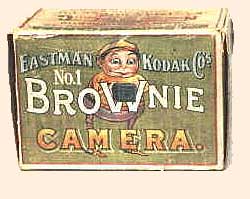
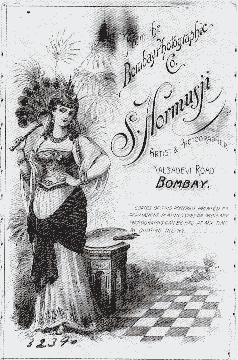
Bombay was a city of boxes, I told you.. house boxes, theatre boxes, and the small beautiful match boxes with pictures on them.
The wonder of paper, how much you children take it for granted, the way your books look, how my throat catches when I see you crumpling a sheet and throwing it away so easily, you, Prabhkar, especially.
Bombay was the city of paper, and pictures on paper, and words on paper and I collected them, things that the household in Dadar would throw away, I kept everything, carefully.
I would look at the grain on the paper, it looked like sand, like a sprinkling of rain over the sea. The same rain falls on film, have you seen it?
What I missed about my hometown was the charcoal. That made paper of the walls and the ground around me. Limited paper, so I soon learnt to draw well. Hold the coal down on the wall and complete the picture in one stroke. I would do the same on paper, in Dadar, at school, at my work. Everything was precise, it has to be so. It is the virtue of scarcity.
Like an alphabet leaves an impression on paper, an image must leave an impression on the mind that sees. The wood engraving must be stamped on the soft matter of the human brain. The painter's brush must paint her lines there.
The rule that decides whether an image will live, is its ability to leave its mark: only those images that leave their mark and slowly dissolve into the blood of the viewer, changing its chemical composition, survive.
Printing presses were proliferating in the 80's, trying to update themselves with new sorceries to draw watching eyes towards the image. Once the eye was absorbed, the image was able to travel the distance into the darkness that lay behind those watching eyes, to become mind, to float there and look back saucily at the lamp that lit those labyrinthine corridors from time to time.
We photograph things to drive them out of our minds. My stories are my way of shutting my ears: Kafka.
Atomic Theory of electricity.
A proposal that electric and magnetic fields filled the void.
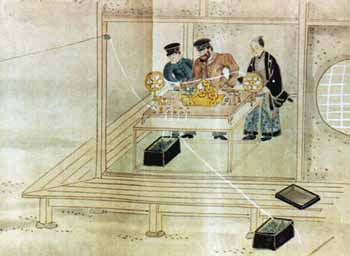
From this came many proposals- can not we plug into this all pervasive energy in the air? and run our civilisation on this endless resource? Nikolas Tesla[1] was to ask.
Rayon
Brooklyn Bridge
Calcutta International Exhibition to encourage art wares. However while art wares were displayed, the precedence of fine art in art schools and in the minds of the general public became more and more evident.
Oils, watercolours and drawings by the Calcutta Art School( a commercial enterprise run by ex students) were shown and given medals, copies of Ajanta frescoes by students of the Bombay art school got medals.
There was an educational section demonstrating the progress oof teaching in art schools in India.
Calcutta Art Studio lithographs and Poona Chitrashala Press oleographs were also praised for the 'perfect marriage' between Western and Indian methods.
Waajid Ali Shah
phrenology
phrenology
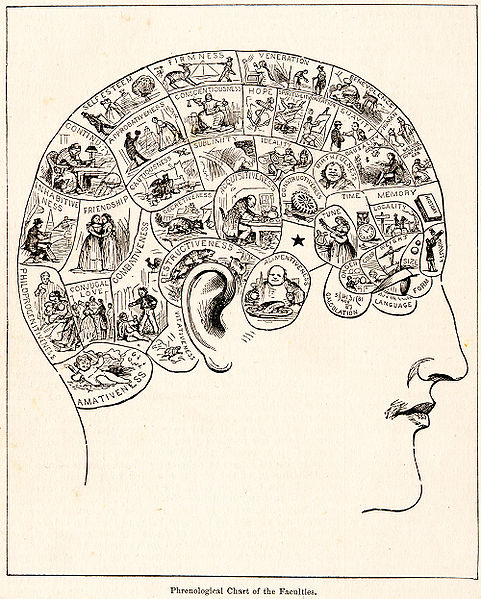
and 21st century
[2]
Malka Jaan, Gauhar's mother, shifts with her child and consort- Khurshid, to Calcutta, on Khurshid's planning: in Calcutta, Wajid Ali has recomposed the charms of his court in Matiya Burj, in exile. Soon Gauhar will catch the eye of Bindadin Maharaj, famous Kathak dancer of this court in exile and he will become her Kathak teacher. Gauhar is 11 when she starts learning, often traveling to Oudh with her master, who has not yet left his old city behind.


![[2]](http://cdn2-b.examiner.com/sites/default/files/styles/large/hash/78/a8/z_274.jpg)