Difference between revisions of "1872"
| Line 1: | Line 1: | ||
| − | |||
| − | |||
| − | |||
[[Image: Cfa voysey-1930-nursery design.jpg]] | [[Image: Cfa voysey-1930-nursery design.jpg]] | ||
| Line 7: | Line 4: | ||
(The studio passes by a large tree, the children rush to the window, a crow has made a nest of thatch, pink mouths are straining out of the nest, noisy in their call for food. A squirrel is carrying its bushy train of a tail from branch to branch. A bird squeaks a structured note in three pieces, repeatedly. The studio passes by the heart of the large tree and suddenly, before them, is the open sky and the flowing line of the Brahmagiri hills.) | (The studio passes by a large tree, the children rush to the window, a crow has made a nest of thatch, pink mouths are straining out of the nest, noisy in their call for food. A squirrel is carrying its bushy train of a tail from branch to branch. A bird squeaks a structured note in three pieces, repeatedly. The studio passes by the heart of the large tree and suddenly, before them, is the open sky and the flowing line of the Brahmagiri hills.) | ||
| + | |||
| + | Dada: | ||
| + | |||
| + | I grew up under Trymbakeshvar's large skies. One celestial art student scribbled with his paintbrush, the Brahmagiri came into being. | ||
--------- | --------- | ||
Sarasvati is sitting with children all around her- Babaraya, Mahadeva, Mandakini, Neelkanth, Prabhakar, Srikrishna, the baby. | Sarasvati is sitting with children all around her- Babaraya, Mahadeva, Mandakini, Neelkanth, Prabhakar, Srikrishna, the baby. | ||
| − | Cots are joined together, the beds | + | Cots are joined together, the beds are warm like as nests. Mahadev lolls, Mandakini is by her mother, her hand on her Sarasvati's lap, Prabhakar is trying to put his head into the same space where the baby Srikrishna's head lies, staring out at the moon of Babaraya's eye at the window, Neelkanth is on her shoulder. Covered with her children, she tells them the story of a river. |
Sarasvati: | Sarasvati: | ||
| − | In a time when there was no plough, how did the rishi Gautam have a green field? He flung seeds here and there on the ground like everyone else, and still when his crop came up, it came together like coherent sentence and made a | + | In a time when there was no plough, how did the rishi Gautam have a green field? He flung seeds here and there on the ground like everyone else, and still when his crop came up, it came together like a coherent sentence and made a pretty field. This got Gautam a lot of respect on earth, and it got him the jealously of the gods. |
| − | They | + | They sent a hungry cow to his field. Some say that they prayed to Ganesh first and while he detested their lowly plan, he was bound to oblige the hard working devotees, the ritualistic masters. People often pray hard to destroy things, you know.. |
Sarasvati stares at her children, all with a black mark at the edges of their forheads to drive away the evil eye, all secured with a holy amulet tied to a black thread, around their stomachs. | Sarasvati stares at her children, all with a black mark at the edges of their forheads to drive away the evil eye, all secured with a holy amulet tied to a black thread, around their stomachs. | ||
| Line 24: | Line 25: | ||
Mahadev: Mandakini, show how? | Mahadev: Mandakini, show how? | ||
| − | Mandakini leans down a bit and wanders in this field of children, taking swings at the 'crop' of little ones. Srikrishna giggles, Prabhakar begins to beat her up. | + | Mandakini leans down a bit, and swinging her large head, wanders in this field of children, taking swings at the 'crop' of little ones. Srikrishna giggles, Prabhakar begins to beat her up. |
Gautam saw a large cow lumbering among his radiant crop, looking isolently at him, her jaws slowly making mulch of his magical farm. | Gautam saw a large cow lumbering among his radiant crop, looking isolently at him, her jaws slowly making mulch of his magical farm. | ||
| Line 30: | Line 31: | ||
He would wonder for a long time after, he had merely flung a piece of straw at her as he chased her out, how did she just fall down and die? | He would wonder for a long time after, he had merely flung a piece of straw at her as he chased her out, how did she just fall down and die? | ||
| − | However it happened, he had the death of a cow on his hands, and Gohatya is a crime with no easy penance. Gautam | + | However it happened, he had the death of a cow on his hands, and Gohatya is a crime with no easy penance. Gautam prayed desperately to Shiva, his body still as a corpse. |
(Mandakini perches her right foot on her left thigh and stands, hands aloft, like an ascetic. Neelkanth slides down Sarasvati's shoulder, she catches him in her lap.) | (Mandakini perches her right foot on her left thigh and stands, hands aloft, like an ascetic. Neelkanth slides down Sarasvati's shoulder, she catches him in her lap.) | ||
| Line 36: | Line 37: | ||
Sarasvati: | Sarasvati: | ||
| − | + | Shiva knew the first forgiveness was a bath in the Ganga. But the Ganga was so far away. The wild head neelkantha ( Sarasvati looks fondly at her son) decided to ask Ganga to help Gautam. | |
| − | |||
Ganga would not refuse the blue skinned god, you remember, she had lived in his hair. | Ganga would not refuse the blue skinned god, you remember, she had lived in his hair. | ||
It had been meant as a trap, but over time, after both of them got used to it, they began to notice one another. Who is the man whose wild hair I feel on my body all the time, Ganga wondered. | It had been meant as a trap, but over time, after both of them got used to it, they began to notice one another. Who is the man whose wild hair I feel on my body all the time, Ganga wondered. | ||
| − | Who is this hair clip that is soft like the stomach of Ganesha? | + | Who is this hair clip that is soft like the stomach of Ganesha? |
Shiv knew when Gautam prayed to him, that if he told Ganga to go to Trymbakeshvar, to do anything, Ganga would not refuse him. | Shiv knew when Gautam prayed to him, that if he told Ganga to go to Trymbakeshvar, to do anything, Ganga would not refuse him. | ||
Revision as of 15:32, 18 November 2009
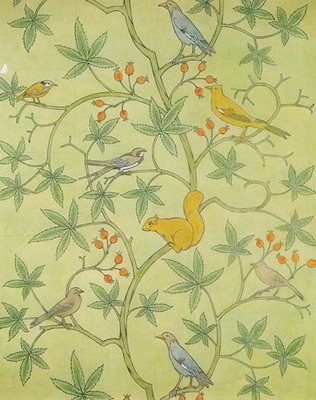

(The studio passes by a large tree, the children rush to the window, a crow has made a nest of thatch, pink mouths are straining out of the nest, noisy in their call for food. A squirrel is carrying its bushy train of a tail from branch to branch. A bird squeaks a structured note in three pieces, repeatedly. The studio passes by the heart of the large tree and suddenly, before them, is the open sky and the flowing line of the Brahmagiri hills.)
Dada:
I grew up under Trymbakeshvar's large skies. One celestial art student scribbled with his paintbrush, the Brahmagiri came into being.
Sarasvati is sitting with children all around her- Babaraya, Mahadeva, Mandakini, Neelkanth, Prabhakar, Srikrishna, the baby. Cots are joined together, the beds are warm like as nests. Mahadev lolls, Mandakini is by her mother, her hand on her Sarasvati's lap, Prabhakar is trying to put his head into the same space where the baby Srikrishna's head lies, staring out at the moon of Babaraya's eye at the window, Neelkanth is on her shoulder. Covered with her children, she tells them the story of a river.
Sarasvati:
In a time when there was no plough, how did the rishi Gautam have a green field? He flung seeds here and there on the ground like everyone else, and still when his crop came up, it came together like a coherent sentence and made a pretty field. This got Gautam a lot of respect on earth, and it got him the jealously of the gods.
They sent a hungry cow to his field. Some say that they prayed to Ganesh first and while he detested their lowly plan, he was bound to oblige the hard working devotees, the ritualistic masters. People often pray hard to destroy things, you know..
Sarasvati stares at her children, all with a black mark at the edges of their forheads to drive away the evil eye, all secured with a holy amulet tied to a black thread, around their stomachs.
The elephant god disguised himself as a cow and entered Gautam's field.
Mahadev: Mandakini, show how?
Mandakini leans down a bit, and swinging her large head, wanders in this field of children, taking swings at the 'crop' of little ones. Srikrishna giggles, Prabhakar begins to beat her up.
Gautam saw a large cow lumbering among his radiant crop, looking isolently at him, her jaws slowly making mulch of his magical farm.
He would wonder for a long time after, he had merely flung a piece of straw at her as he chased her out, how did she just fall down and die?
However it happened, he had the death of a cow on his hands, and Gohatya is a crime with no easy penance. Gautam prayed desperately to Shiva, his body still as a corpse.
(Mandakini perches her right foot on her left thigh and stands, hands aloft, like an ascetic. Neelkanth slides down Sarasvati's shoulder, she catches him in her lap.)
Sarasvati:
Shiva knew the first forgiveness was a bath in the Ganga. But the Ganga was so far away. The wild head neelkantha ( Sarasvati looks fondly at her son) decided to ask Ganga to help Gautam. Ganga would not refuse the blue skinned god, you remember, she had lived in his hair.
It had been meant as a trap, but over time, after both of them got used to it, they began to notice one another. Who is the man whose wild hair I feel on my body all the time, Ganga wondered. Who is this hair clip that is soft like the stomach of Ganesha? Shiv knew when Gautam prayed to him, that if he told Ganga to go to Trymbakeshvar, to do anything, Ganga would not refuse him.
(The children's different eyes, some older some younger in the world, are grappling differently with her story)
So when Ganga went with Gautam to Trymbakesvar Shiv followed.
Mahadev: Why?
Sarasvati: Because two people who always had him in their minds lived there, and Shiv likes to live in places where people are thinking of him.
Mrs. Amelie Caldfield's (nee Thomas) diary, October, 1872
The club house was a riot of young men today. It is tough on the young 'uns( don't I remember my miserable first summer, and of course Gordons horrible horrible stories of how it was when he landed here) for a long while. The heat, the miserable streets, the cooking habits of the native cooks- anything and everything seems ordered to get you down. Which is probably what gives club evenings such a charge: In the select company of 'your own people' ( could we have imagined back home, that one day, that would feel like the biggest treat?), your mind rests, and if you are young, your natural ebullience returns. I was charmed by the lively performance by one young bunch of probationers of this charming ditty, sung to the tune of an old Scottish ( i think) number, with plenty of foot stamping and clapping between the verses. Nothing can pull youth down(sigh).
'Punch' has started an Indian edition, which is much cause for cheer in cantonements across India. The song was an ode to the occasion:
Unexpected bunch
A turbanned Mr. Punch
smoking a hubble bubble
around him (en) deshabille
Many dusky Indian filles
Asking our man for trouble
(and they would roll their eyes in horror at the thought. They was one red haired, endearing fellow who quite fell off the stage with the ferocity of the faces he was trying to make)
The delicate rabbits
Of Englishmen's habits
demand a par-ti-cu-lar humour
Besides the impunity
Of the '57 mutiny
has been giving our boys there a tumour
( I turned to look at Gordon at this point. He lost his uncle in the seige of Cawnpore, he does not take kindly to jokes on that time. Gordon's face was completely impassive, of course, but still, when you are a wife, you can see when something shifts in the eyes.)
A shared snark at the darkies
Togged up in our khakis
is taking the whiskies down better
some Mookerjee writing
in english!! o blighting!
Does he know the alphabet-er?
Mookerjee, Colonel Todd told me later- he is well versed in all such matters, is some Indian fellow who has been trying to print in English. I told him I would like to see that publication! That would be merry indeed.
Dada: My father would say that there are two kinds of nectars- the elixirs and the poisons. Both are potent, neither can be spilled, both must be absorbed. Trymbakesvar absorbed some of the nectar that spilled from a heavenly row.
Saraswatibai smiles: The soil of your hometown drank something meant to make the gods eternal.
Babaraya: So maybe when all the earth is gone, Trybakesvar will still remain..
Dada: When you walk in that town, you feel the charge in the air. There amid the mountain mists you know you are walking into your own consciousness.
At bed time Saraswatibai sits with the children and tells them the story of Trybakesvar Sarawatibai:
In the ages that preceded all ages, in a time that was before all times, that was not a point, but beyond the point, always beyond every point.. the gods and the demons were children in that time, and always engaged in competitive fights, that we call their battles. They had encountered the frightening spectre of death while at play. They wanted to defeat him. But for that they needed Amruta, the nectar which would give them immortality.
Fear made bravehearts out of them. They uprooted the mountain, Meru, put it on top of a tortoise and wrapped the giant snake Vasuki around it. The devas gathered on one side of the mountain, the asuras on the other, and like a tug of war on the largest scale you can imagine, they churned the ocean.
The skies were full of the gems that the churning threw up. A white horse with wings, Kamadhenu, the cow whose dark eyes have the containing silence of the smoothest riverbed pebbles. An onlooker would have been dazzled by these new stars. But no one else was looking, and those who were churning, had no use of leisure, they only wanted the amruta.
They wanted to drive death, push him away from their playgrounds, so they could play and fight amongst themselves forever. In the machinations, the fights, the interventions that were made to distribute the Amruta when it finally appeared, a few drops fell to the earth. Trymbakeshwar was one of those places where a drop of the nectar of the gods did its alchemy on the soil.
